
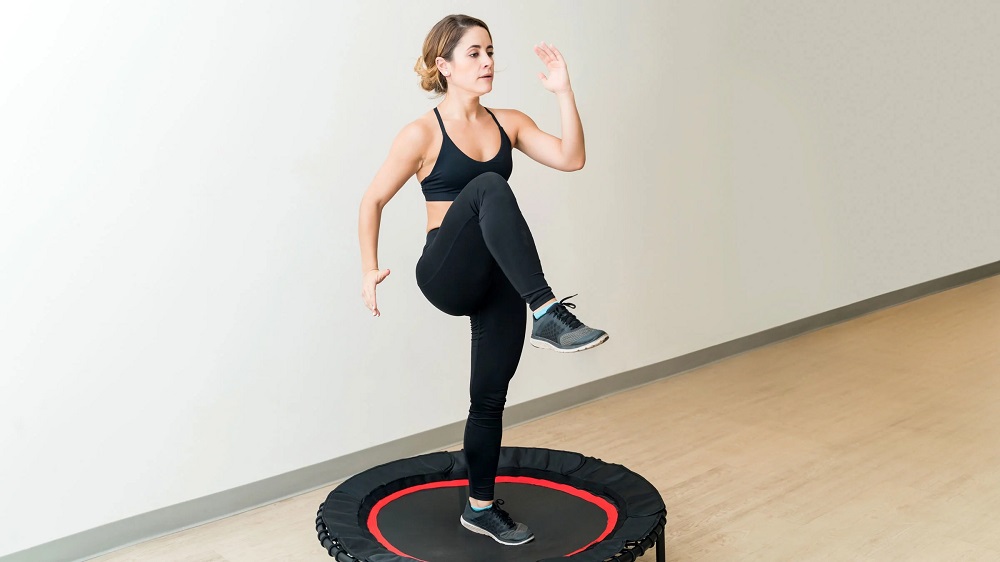
When evaluating the effectiveness of an exercise format, most people focus on calorie burn as the primary metric. A smaller number of informed exercisers also consider joint stress, either because they have existing joint concerns or because they understand that exercise sustainability depends on keeping cumulative joint loading within manageable limits. Very few, however, evaluate these two factors together as a ratio, which is arguably the most useful lens for comparing exercise modalities from a long-term health and performance perspective.
Trampoline fitness singapore compares exceptionally well when calorie expenditure and joint loading are evaluated simultaneously. This is not simply a marketing claim. The biomechanical and physiological characteristics of rebound training create a genuinely favourable ratio between training stimulus and skeletal stress that is worth examining in detail.
Defining the Calorie Burn to Joint Stress Ratio
Calorie burn during exercise is primarily a function of the muscles recruited, the intensity at which they work, and the duration of the session. More muscle mass working at higher intensity for longer duration produces greater energy expenditure. This is straightforward exercise physiology.
Joint stress, in the context of this discussion, refers to the cumulative mechanical load experienced by the joints of the lower limbs and spine during an exercise session. It is a product of the force magnitude at each impact event, the rate at which that force is applied, and the number of loading cycles that occur during a session.
The problem with many high-calorie-burn exercise formats is that they generate joint stress at a rate that limits training frequency. Running burns calories effectively but produces significant knee and ankle joint loading that accumulates rapidly over high weekly training volumes. This forces recovery periods that reduce weekly training volume and therefore total calorie expenditure.
A training format that burns comparable calories per session while generating significantly less joint stress per loading event can be performed more frequently, producing greater total weekly calorie expenditure without increasing injury risk.
Calorie Expenditure During Trampoline Fitness
Research into the energy expenditure of trampoline exercise has consistently found that it produces cardiovascular responses and calorie burn comparable to running at moderate pace. A sixty-minute trampoline fitness session at moderate to vigorous intensity produces energy expenditure in the range of four hundred to six hundred kilocalories depending on body weight, session intensity, and individual metabolic rate.
This places trampoline fitness in the same calorie expenditure category as:
- Jogging at a moderate pace
- Moderate-intensity cycling
- Group aerobic exercise classes
The difference lies not in the calorie burn per session but in the joint loading associated with achieving that calorie burn.
Joint Loading During Trampoline Training vs Ground-Based Exercise
The elastic surface of a fitness trampoline fundamentally changes the mechanical relationship between physical effort and joint stress. When you land on a trampoline mat, the mat deforms and stores kinetic energy over a longer time period than a rigid surface. This extends the force application phase, reducing the peak force experienced at any single moment during the loading event.
Peak ground reaction forces during trampoline landings are substantially lower than equivalent-intensity running on hard surfaces. Studies measuring joint reaction forces have found that trampoline exercise produces ankle and knee loading that can be fifty to sixty percent lower than running at matched cardiovascular intensity.
This means you can work at the same cardiovascular intensity and burn a similar number of calories while your joints experience significantly less cumulative mechanical stress per session. For a person training three times per week, this difference compounds meaningfully over months and years of consistent training.
Practical Implications for Training Frequency and Long-Term Sustainability
The reduced joint stress of trampoline fitness has a practical implication that directly affects long-term calorie management outcomes: it allows higher training frequency without the joint recovery constraint that limits ground-based high-intensity exercise.
A person who can comfortably sustain three trampoline fitness sessions per week without joint soreness or fatigue will accumulate significantly more total weekly calorie expenditure than someone limited to two running sessions per week by knee discomfort. Over a twelve-month training period, this frequency advantage translates into substantially greater total energy expenditure, even if individual session calorie burn is identical.
Additionally, the low-impact nature of trampoline training means that sessions can be distributed more flexibly across the week without requiring long recovery periods between them. Two consecutive days of trampoline fitness is manageable for most participants, whereas two consecutive days of running often produces cumulative joint fatigue that degrades performance and increases injury risk.
Why This Matters Beyond Weight Management
The calorie burn to joint stress ratio is relevant not only for weight management but for cardiovascular health, metabolic health, and training longevity more broadly. Individuals who can sustain consistent high-frequency cardiovascular training across years and decades accumulate substantially greater health benefits than those who train intensively for short periods followed by injury-forced breaks.
Trampoline fitness offers a format where cardiovascular conditioning can be pursued consistently across a wide age range and across different life phases without the joint attrition that eventually forces many runners and high-impact exercisers to reduce or cease training.
TFX Singapore has structured its rebound sessions to deliver high cardiovascular training stimulus within a format that members can attend consistently three or more times per week, supporting sustained health and fitness outcomes rather than short-term intensity spikes followed by forced recovery periods.
FAQ
Q: Does the calorie burn of a trampoline session decrease as fitness improves? Yes, as cardiovascular efficiency improves, the same session intensity requires less energy expenditure. To maintain calorie burn as fitness improves, session intensity or duration should be progressively increased. Structured classes that introduce progressive interval challenges help manage this naturally.
Q: Is trampoline fitness effective for body composition change alongside calorie restriction? Yes. Combined with appropriate dietary management, regular trampoline fitness sessions contribute meaningfully to body composition improvement through calorie expenditure, muscle maintenance, and metabolic rate support. The consistency advantage of the low-impact format makes it particularly sustainable for long-term body composition goals.
Q: Do heavier individuals burn more calories during trampoline fitness? Yes. Calorie expenditure during physical activity scales with body weight because heavier individuals require more energy to move their greater mass. This also means that the joint loading per session is proportionally higher for heavier participants, which reinforces the value of the low-impact surface for this group specifically.
Q: How does the calorie burn of trampoline fitness compare to strength training? During the session itself, trampoline fitness typically burns more calories per hour than moderate-intensity strength training due to the sustained cardiovascular demand. However, strength training produces a greater post-exercise metabolic elevation (EPOC) and builds muscle mass that increases resting metabolic rate over time. Combining both formats produces the most comprehensive metabolic outcome.
