
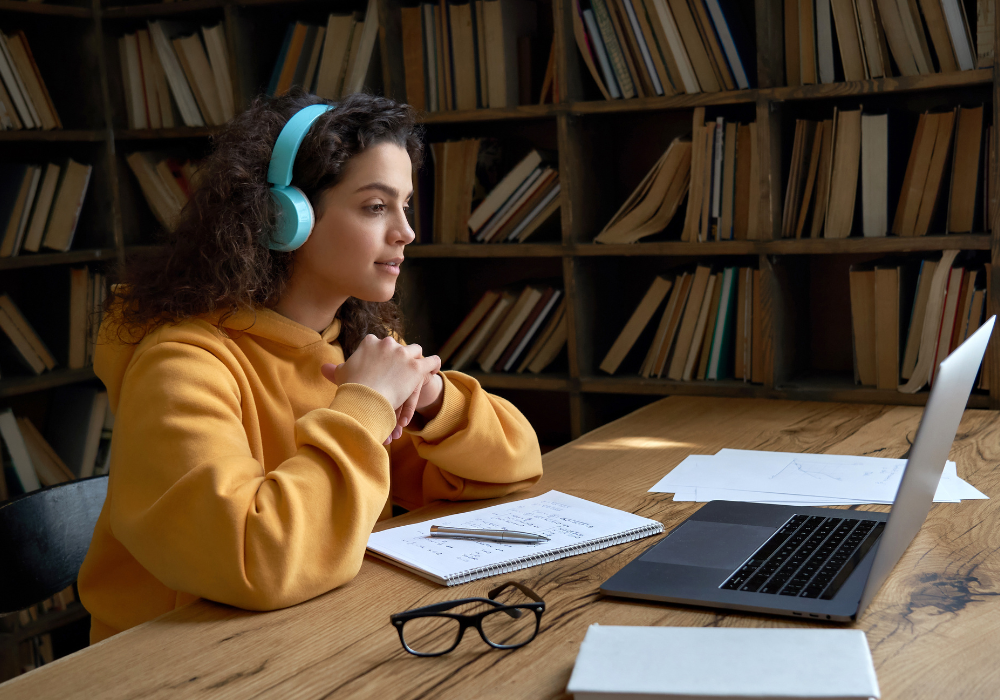
Parents often begin with a practical question: should their child attend a nearby classroom or join an online Physics lesson from home? Both formats can work, but convenience alone does not determine learning quality. Families searching for the Best Physics Tuition Near Me should compare how each environment affects attention, participation, feedback and independent practice, rather than assuming that one format is automatically better.
A nearby class may provide clearer separation between study and home life, while an online lesson can remove travel time and make scheduling easier. The right choice depends on the student’s habits, the quality of teaching and what happens before, during and after each lesson. The real issue is not where the teacher appears, on a screen or in a room. It is whether the student remains mentally active throughout the learning process.
Focus Is More Than Sitting Still
A student can sit quietly in a classroom and still be mentally absent. The same student can keep the camera on during an online lesson while following only part of the explanation. Parents should therefore avoid judging focus only through appearance.
Useful focus includes listening with a purpose, attempting questions before solutions are shown, asking for clarification, recording the reason behind a method and correcting mistakes after feedback. A student who participates in these actions is learning actively, regardless of format.
The first comparison should be based on what the student actually does during a lesson. Does the learner solve, explain and respond, or mainly watch the teacher work? A highly interactive online class may support better concentration than a crowded physical class. A well-managed nearby class may be much stronger than an online lesson filled with distractions.
Nearby Tuition Creates a Dedicated Learning Boundary
Travelling to a tuition centre can create a useful mental transition. The student leaves the home environment, enters a place associated with study and prepares to engage with the subject.
This boundary can help students who struggle to switch from entertainment or rest into academic work. A dedicated classroom may also reduce access to phones, gaming devices, household interruptions and the temptation to minimise the lesson window.
Physical classrooms can make it easier for a teacher to notice hesitation, incomplete working or loss of attention. The tutor can inspect diagrams and ask the student to explain a decision before the page is completed.
However, the benefit depends on the class structure. A student seated at the back of a large group may remain passive. Being physically present does not guarantee meaningful interaction.
Travel Can Improve Routine or Damage Energy
A nearby class may provide structure, but travel has a cost. Students who attend lessons immediately after school may arrive tired, hungry or mentally overloaded. A short journey may be manageable, while a long commute can reduce the quality of both the tuition lesson and the homework completed afterwards.
Parents should calculate the full time cost, not only the lesson duration. A ninety-minute class can occupy three hours when waiting, travel and meals are included. That time may come from sleep, schoolwork or independent revision.
The question is whether travel creates a productive transition or simply adds fatigue. The closest option is not automatically the strongest, but a high-quality class becomes less useful when the weekly journey is unsustainable.
Online Tuition Removes Travel but Brings the Home Environment into the Lesson
Online learning can save substantial time. Students can move directly from schoolwork to tuition and use the remaining time for dinner, rest or revision.
The format can be especially useful for students with long school days, heavy CCA commitments or limited transport options. It may also allow families to choose a suitable teacher without being restricted to one neighbourhood.
The challenge is that the home environment remains present. Messages appear, family members enter the room and other browser tabs are available. A student may also feel less social pressure to remain engaged when the teacher is not physically nearby.
Online lessons work best when the student has a stable internet connection, a suitable device, a quiet working area and clear rules about notifications. Joining from a sofa with a phone is not equivalent to joining from a desk with paper, calculator and materials ready.
Interaction Must Be Designed Deliberately
In a physical class, interaction can happen naturally through eye contact, movement and quick questions. Online teaching requires more deliberate structure.
A strong online Physics lesson may use screen annotation, digital whiteboards, document cameras, polls and regular requests for students to show their reasoning. Students should still attempt questions before seeing the solution.
Parents can ask how the tutor checks understanding online. Does the teacher call on students? Are workings submitted during the lesson? Can the tutor see where the reasoning breaks down? Are students expected to explain answers verbally?
If the lesson consists mainly of a teacher speaking while students watch slides, attention will be difficult to maintain. The problem is not the internet. It is the passive lesson design.
Consider the Student’s Self-Regulation
Some students can manage devices, notifications and independent setup well. Others need the external structure of a physical classroom.
Parents should review the child’s behaviour honestly. Does the student begin online lessons on time without repeated reminders? Are materials prepared? Does the student attempt work independently or search for answers immediately?
A learner who lacks self-regulation is not permanently unsuitable for online tuition. These habits can improve. However, parents should not assume the format will fix them automatically.
For a student who frequently becomes distracted at home, a nearby classroom may provide stronger support while self-management develops. For a disciplined student who values saved travel time, online learning may be highly effective.
Feedback Quality Matters More Than Format
Whether online or physical, the teacher must see enough of the student’s work to provide useful feedback.
A tutor should be able to distinguish a concept error from an algebra error, a misread graph from a unit mistake and a weak explanation from incomplete understanding. The student should then redo the question rather than simply observe the correct answer.
Online platforms can support feedback through shared screens, uploaded work and digital annotations. Physical lessons can support immediate inspection of notebooks and diagrams. Either format can fail if feedback remains vague.
Parents should ask how corrections are handled and whether important mistakes return in later lessons. Good feedback should improve the student’s next attempt, not only make the current page correct.
Trial Both Formats Under Realistic Conditions
A trial lesson is more useful when the student attends under normal weekly conditions. An online trial taken during a quiet holiday morning may not reflect what happens after a long school day. A physical trial with special transport may not reflect the usual commute.
After the lesson, ask the student specific questions. Could the teacher see when help was needed? Was there enough opportunity to attempt questions? Did the student understand the feedback? How much energy remained afterwards?
Parents should also observe the following week. Did the student remember the method? Was the homework completed? Could a corrected question be solved again?
The best environment is the one that supports learning after the lesson, not merely a positive first impression.
Hybrid Support Can Work When Roles Are Clear
Some students benefit from a combination. They may attend a physical class for structured teaching and use online consultations for specific questions. Others may join regular online lessons but attend occasional in-person workshops or assessments.
Hybrid support works only when each element has a clear role. Adding multiple formats without coordination can duplicate content and increase workload.
Parents should ask whether the programme’s resources, homework and feedback remain connected across formats. The student should not feel as though two unrelated courses are competing for attention.
Match the Format to the Learning Problem
The choice should return to the reason tuition is needed.
A student with weak confidence may benefit from a smaller physical class where the tutor can notice hesitation. A student with severe travel fatigue may learn better online. A student who needs close correction of diagrams and working may succeed in either format if the tutor has a reliable method for viewing the work.
Families reviewing TGC ACADEMY can compare available support by looking at teaching interaction, feedback and fit with the student’s schedule. The strongest decision is based on the child’s behaviour and learning needs, not a general claim that online or nearby tuition is always superior.
Frequently Asked Questions
Q. Is physical Physics tuition always more interactive?
Ans. No. Interaction depends on class size, teaching design and whether students are expected to explain and attempt questions. A passive physical class may be less interactive than a well-run online lesson.
Q. Can online Physics tuition work for a distracted student?
Ans. It can, but the student may need a dedicated workspace, blocked notifications, prepared materials and regular participation checks. Some students may initially benefit more from an external classroom structure.
Q. How much travel time is too much?
Ans. There is no universal limit. Parents should consider the total effect on sleep, school homework, meals and energy. The journey should be sustainable throughout an ordinary school week.
Q. What should parents observe during a trial lesson?
Ans. They should check whether the student attempts questions, receives specific feedback, remains engaged and can explain the learning afterwards. The following week’s retention is also important.
Q. Is hybrid tuition better than choosing one format?
Ans. Not automatically. A hybrid model works when each format has a clear purpose and the teaching, homework and feedback remain coordinated.
Choose the Environment That Produces Active Learning
The best tuition format is not defined by a classroom address or a video platform. It is the environment in which the student listens actively, attempts independently, receives useful correction and continues practising after the lesson.
Parents should compare routine, travel, self-regulation and feedback quality. When these factors are matched carefully, both nearby and online Physics tuition can support strong progress.
